
Transforming an overgrown or poorly configured property into an open, functional sanctuary requires a balanced vision that harmonizes productive garden beds with wide, vibrant lawn space. Many homeowners feel trapped by yards that seem claustrophobic, dark, or fragmented. In reality, most residential lots contain substantial hidden square footage that remains locked away behind unmanaged brush, dense overhead tree canopies, creeping invasive roots, or ill-advised structural placement. When a landscape lacks a cohesive master plan, individual zones compete with each other rather than working together, leaving property owners with soggy shade patches, unusable side yards, and hard-to-maintain corners.
Unlocking the true potential of your outdoor space demands a methodical approach that transitions smoothly from structural site planning down to the fine details of soil preparation. Rather than making piecemeal changes that often lead to redundant labor and budget overruns, taking a systematic perspective ensures that every phase of your property overhaul builds upon the last. By establishing precise boundaries, thinning obstructive high-canopy limbs, removing heavy subsurface obstacles, building durable hardscapes, and laying down fresh ground cover, you can create a seamless indoor-outdoor lifestyle. This comprehensive guide walks you through every essential phase of site transformation, giving you the knowledge needed to maximize every square foot of your property with confidence.
Establishing Property Boundaries and Structural Enclosures

Before breaking ground on any expansive landscape redesign or digging deep trenches for garden beds, securing an accurate understanding of your legal property footprint is critical. Many residential boundary lines do not align perfectly with existing hedges, old retaining walls, or informal visual markers established by previous owners. Encroaching onto neighboring land or installing permanent features inside public utility easements can result in costly legal mandates to remove structures after construction. Commissioning a licensed land surveyor ensures that every physical corner pin is accurately identified, providing a legally sound baseline map that protects your investment during major outdoor construction projects.
- Obtain a certified copy of the complete boundary survey plat detailing exact linear dimensions, setback distances, and recorded property corners.
- Locate and mark all physical underground utility lines by calling local utility location services prior to driving stakes or excavating soil.
- Identify all municipal, county, or utility easements where permanent landscape structures, trees, or hardscape foundations are legally prohibited.
- Place bright, visible surveyor stakes at key corner intersections and along extended lot lines to maintain precise visual guidance throughout construction.
- Document existing grade elevations and topographical contours along property lines to plan effective drainage solutions that prevent runoff disputes.
Once property lines and setback constraints are fully documented, establishing clear spatial boundaries within your yard allows you to segment open lawn space from utility zones, compost bins, and private garden sanctuaries. Enclosing your property perimeter or dividing interior zones enhances privacy, prevents domestic pets from straying, and creates a clean visual backdrop that highlights ornamental plantings. Coordinating a professional fence installation along your verified property boundaries establishes defined structural lines, helping to frame lawn areas while shielding garden spaces from heavy wind corridors and unwanted animal intrusion.
- Review local municipal codes and homeowners association bylaws regarding maximum structural heights, setback rules, and material approvals.
- Select durable, weather-resistant building materials such as pressure-treated cedar, low-maintenance vinyl, composite panels, or powder-coated aluminum.
- Set structural support posts inside excavated holes dug below the local geographical frost line using high-strength, quick-setting concrete.
- Incorporate wide utility gates along major side access pathways to ensure heavy lawn care machinery, mowers, and wheelbarrows can enter easily.
- Apply protective sealants, stains, or anti-rot treatments to wood surfaces before final assembly to extend structural lifespan in damp soil environments.
Evaluating Canopy Density and Managing Overhead Foliage
Achieving a lush lawn and a flourishing vegetable or flower garden depends heavily on the amount of direct solar radiation reaching the lower strata of your landscape. Mature trees with unmanaged, thick overhead foliage block vital sunlight, creating deep shade zones where turf grass starves, and flowering plants struggle to produce blossoms. Consulting certified arborists allows homeowners to conduct an expert canopy assessment, identifying which upper branches can be strategically pruned to allow dappled sunlight through without weakening the tree’s overall structural health.
- Conduct a detailed daylight audit by documenting sunlight patterns across your yard at two-hour intervals throughout a clear day.
- Prioritize full-sun zones receiving six or more hours of direct light for sun-loving vegetable crops, fruit trees, and dense turfgrass varieties.
- Implement crown thinning, canopy lifting, and selective limb reduction techniques rather than drastic, destructive tree topping practices.
- Trim overhanging limbs that hover directly over rooflines, gutters, power lines, or delicate garden infrastructure to prevent storm-related damage.
- Inspect primary structural crotches for included bark or weak attachments that require cabling or bracing to stabilize high limbs.
In cases where mature trees are severely decayed, structurally compromised, or positioned directly in the center of planned lawn or garden spaces, selective extraction becomes necessary. Crowded timber stands compete aggressively with surrounding vegetation for soil nutrients, subterranean moisture, and root expansion space. Executing targeted tree removals clears wide daylight corridors through dense upper canopies, instantly transforming dark, damp patches of ground into prime, sun-drenched growing zones suitable for lush grass and diverse flower beds.
- Inspect tree trunks carefully for signs of internal decay, including fungal bracket growth, hollow wood, carpenter ant activity, or peeling bark.
- Identify structural defects such as severe trunk leans, co-dominant stems with included bark, or extensive dieback in the upper crown.
- Clear surrounding ground space of outdoor furniture, potted plants, elevated garden features, and decorative hardscapes before felling begins.
- Convert harvested hardwood branches and limbs into organic wood mulch for garden beds using a commercial high-capacity wood chipper.
- Stack usable hardwood trunk sections in dry, elevated woodsheds to season for future home heating or outdoor fire pit use.
Clearing Subsurface Obstacles and Heavy Timber
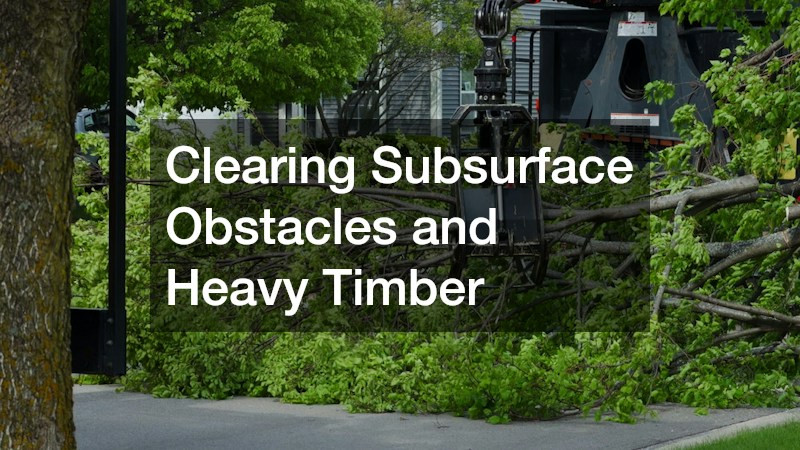
Executing heavy canopy clearing, elevated branch rigging, and large-scale timber extraction requires specialized machinery, rigorous safety protocols, and advanced technical experience. Attempting to fell large trunks or maneuver heavy logs in tight residential spaces without professional assistance poses extreme safety risks to homeowners and adjacent structural foundations. Engaging a reputable tree company provides access to industrial crane equipment, bucket trucks, and trained rigging crews who can systematically dismantle large timber without disrupting nearby garden structures or compacting sensitive garden soil.
- Verify that prospective contractors hold active general liability insurance and workers’ compensation coverage directly with their insurance carrier.
- Confirm that heavy equipment operators utilize protective ground mats across lawn areas to distribute weight and prevent deep tire rutting.
- Establish clear access routes between the main street and the work site to avoid damaging residential driveways, curbs, or underground irrigation lines.
- Request itemized written contracts detailing timber dropping, brush chipping, wood stacking, and complete site debris haul-away terms before work begins.
- Schedule heavy clearing work during dry weather windows or winter months when ground surfaces are frozen to minimize lawn surface disruption.
Felling a tree is only half the battle when reclaiming yard real estate, as leaving massive root masses embedded in the earth creates long-term structural and biological challenges. Subsurface wood rots slowly over many years, attracting subterranean termites, carpenter ants, and fungal growths while depriving surrounding topsoil of essential nitrogen. Scheduling comprehensive stump removal ensures that subterranean wood is pulverized far beneath the soil line, allowing you to level the terrain, restore soil chemistry, and prepare the ground for fresh lawn planting or garden bed installation.
- Grind subterranean wood masses to a depth of eight to twelve inches below the soil surface to completely break up major root flare structures.
- Rake out all accumulated wood shavings, coarse chips, and sawdust from the excavated crater to prevent soil acidification and nitrogen depletion.
- Fill the remaining subterranean cavity with clean topsoil heavily amended with organic compost to prevent future ground settling.
- Tamp down backfilled soil layers in three-inch lifts using a mechanical tamper to ensure a stable, solid base for future turfgrass or garden planting.
- Blend balanced soil amendments and lime into the backfilled area to neutralize residual acidity left behind by decaying wood fiber.
Handling Environmental Hazards and Structural Foundations
During the process of clearing overgrown brush, old hollow logs, and neglected outdoor structures, homeowners frequently encounter unexpected biological hazards nesting within the dense vegetation. Wild honeybee colonies, yellowjackets, and hornets often establish active hives in sheltered foliage, subterranean root cavities, or decaying timber trunks. Arranging for humane bee removal allows trained specialists to safely extract colonies and transfer beneficial pollinators to local apiaries, ensuring your workspace remains safe for construction while protecting valuable insects that support garden cross-pollination.
- Inspect overgrown hedges, dry stone walls, and hollow tree trunks during cool early morning hours when insect flight activity is minimal.
- Avoid applying broad-spectrum chemical insecticides that contaminate local soil, kill earthworms, and damage beneficial native pollinators.
- Coordinate with regional beekeeping associations or licensed relocation professionals to safely trap and transfer active honeybee swarms without harm.
- Seal structural gaps in garden sheds, porch foundations, hollow retaining walls, and wooden fence posts to prevent recurring insect nest formation.
- Maintain clear perimeter buffer zones around active work areas until professional relocation crews have successfully removed established hives.
With biological hazards safely managed and heavy site clearing complete, the next step in maximizing your outdoor space involves building stable, durable foundations for functional yard features. Unstable, muddy soil conditions under garden sheds, outdoor kitchens, or covered seating areas create ongoing maintenance headaches and spoil the clean visual lines of your lawn. Partnering with professional concrete services enables you to pour level, fiber-reinforced slab foundations that consolidate storage equipment, trash bins, and outdoor living amenities onto pristine, low-maintenance hardscape pads.
- Excavate organic topsoil down to stable sub-base subsoil or clay layers before setting timber formwork for flatwork projects.
- Compact a four-inch base layer of crushed gravel aggregate using a mechanical plate compactor to provide adequate drainage under hardscape slabs.
- Position steel rebar grids or heavy wire mesh reinforcement inside formwork to prevent structural cracking under heavy machinery loads.
- Slope concrete pad surfaces at a subtle quarter-inch drop per linear foot away from home foundations to manage heavy rainwater runoff.
- Apply concrete curing compounds, or moist-cure covers over fresh pours to ensure maximum compressive strength development over seven days.
Constructing Integrated Pathways and Restoring Greenery
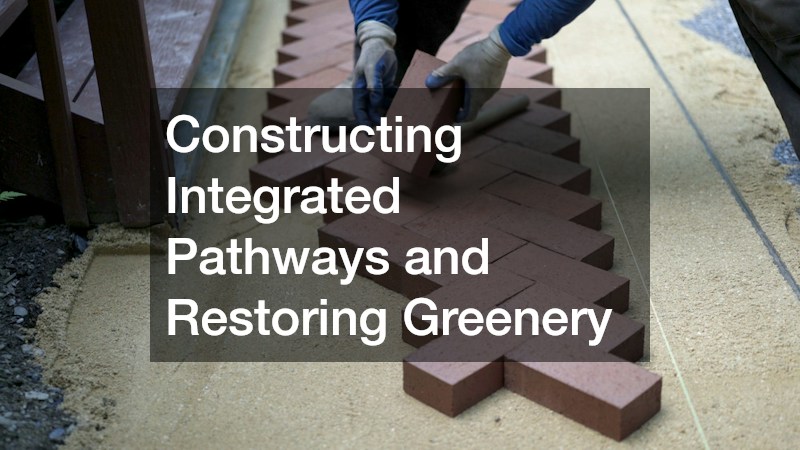
A well-designed property seamlessly connects functional outdoor spaces, guiding foot traffic along stable, beautiful corridors that protect sensitive lawn areas from soil compaction and erosion. Running high-traffic walking routes directly across open grass quickly creates unsightly dirt paths, muddy trenches, and uneven turf wear during rainy seasons. Contracted work through a local paving service allows you to construct custom paver walkways, flagstone paths, or smooth asphalt routes that gracefully link kitchen entries, patio seating, storage sheds, and garden borders.
- Plan primary walkway widths between three and four feet wide to comfortably accommodate two pedestrians walking side-by-side or wide lawn equipment.
- Lay heavy-duty woven geotextile fabric beneath crushed gravel aggregate sub-bases to suppress weed growth and stabilize pathway foundations.
- Install rigid plastic or metal paver edging restraints along pathway borders to lock stones in place and prevent lateral edge shifting over time.
- Sweep high-performance polymeric sand into paver joints, moistening it to lock unit pavers together and inhibit weed germination and ant burrowing.
- Integrate ambient, low-voltage LED path lighting along walkway borders to enhance nighttime navigation and highlight garden bed contours.
The final, defining phase of turning cleared, hardscaped land into an inviting outdoor haven is establishing a lush, uniform carpet of healthy green grass. Bare soil left exposed to hot sun and heavy rain quickly erodes, breeds invasive weeds, and ruins the crisp aesthetic of your newly structured garden beds. Investing in professional turf installation delivers an instant, thick lawn that stabilizes topsoil, lowers surface ambient temperatures, and provides an appealing outdoor space for family recreation and relaxation.
- Grade topsoil smooth across all open zones, removing surface stones, residual roots, and debris larger than one inch in diameter.
- Till rich organic compost and balanced starter fertilizer into the top four to six inches of soil to nourish rapidly expanding root systems.
- Lay sod rolls in a staggered, brick-like pattern along slope contours, fitting seams tightly together without overlapping or leaving gaps.
- Water newly installed sod immediately to saturate the underlying soil to a depth of six inches, rolling the turf gently to eliminate air pockets.
- Establish a strict watering schedule during the first two weeks, keeping the sod consistently moist until root systems anchor securely into the topsoil.
Reclaiming Your Ultimate Outdoor Living Sanctuary

Reclaiming your property and maximizing your lawn and garden space is one of the most rewarding home improvement journeys you can undertake. By approaching your landscape with a clear master plan, you transform fragmented, underutilized ground into an expansive, highly functional outdoor sanctuary. From defining property boundaries and opening overhead sun corridors to building stable hardscape pads and laying vibrant, healthy grass, each phase plays a critical role in elevating the overall beauty, utility, and market value of your home.
Taking the time to systematically plan your site layout, eliminate heavy subsurface obstacles, and establish intuitive traffic pathways ensures that your outdoor investment endures for decades to come. Beyond the immediate visual upgrade, a thoughtfully organized yard reduces ongoing maintenance demands, optimizes growing conditions for your vegetables and flowers, and provides a welcoming backdrop for outdoor living and entertaining. With the right strategies and professional partnerships in place, your vision of a spacious, perfectly balanced garden retreat becomes a living reality right outside your back door.